Learning To Live With A Brain Tumour
By Ashley Terry
Feb 22, 2022
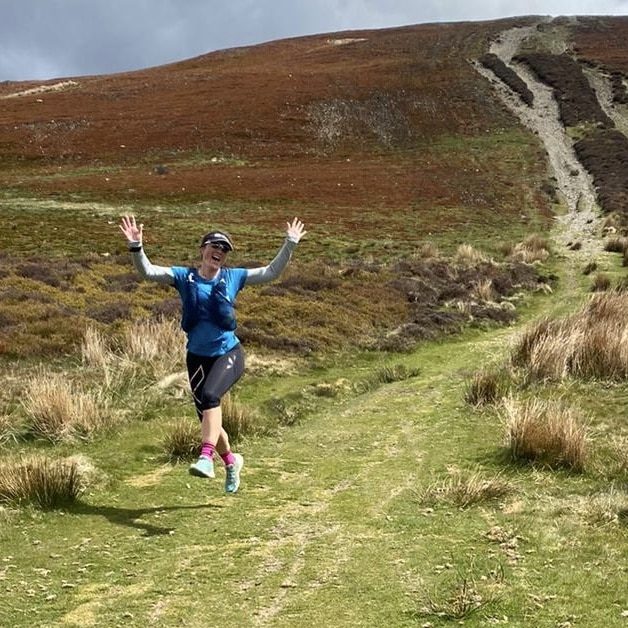
You could say I’ve run pretty much all my life! I started running aged eight along with my dad and brother. Thanks to my dad I learned that movement and fitness help with other things in life and quite early on I recognised how much running helped with how I felt. It helped me through exam revision at school, a stressful veterinary medicine degree at university and then later on in life, running helped me when I started new jobs, moved house, navigated redundancy and endured a relationship breakdown. When I moved to Shropshire I got into doing longer runs and before I knew it I was running ultra marathons!
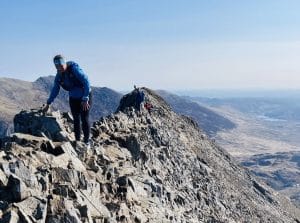 I was diagnosed with breast cancer in 2013 at the age of 39. All through my treatment I remained active and spent whatever time I could running and mountain biking. It was my coping mechanism. It felt better to be proactive because it was something I could choose to do and that would make me feel good, at a time when my life was filled with treatments, appointments etc. I received no information whatsoever about movement and exercise; in fact, the advice was to rest but I just couldn’t do that as I’d been active all my life and it felt normal for me to move. I was – and still am – surrounded by “can do” people and that really helped. I’m very much the sort of person who just gives something a go. I’d turn up to radiotherapy in full cycling gear, much to the amusement of everyone else! But movement had served me well all my life so wouldn’t I carry on?
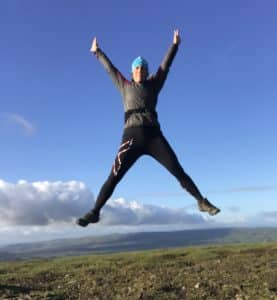 Between my first and second diagnosis I had nine years so I ramped up my running and cycling challenges as I wanted to prove to myself I could still achieve amazing things. I was probably at the fittest point I’d been in my life when I started to have back pain and extreme fatigue. I was exhausted and the pain became unbearable. I stopped running as it was just too difficult but I was able to keep up my cycling which was great. It took 9 months of appointments to be diagnosed and then came the news that I had secondary breast cancer. It was in my spine, ribs, pelvis and lungs. I was told I’d never run again because of my back but I knew I could walk so as soon as possible after surgery, I was out walking with my crutches. Nine months later I ran an ultra! It was important to me to get some of my identity back and I loved being able to run again.
However, the joy was short-lived. My first treatment stopped working, I ended up with a knee injury, voicebox issues and a hip replacement – all of which meant I could no longer run.
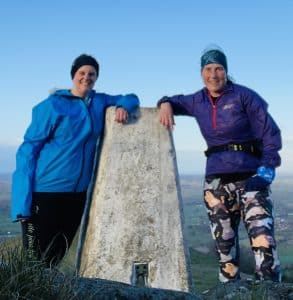 I miss running massively. How do you cope when your coping mechanism has gone? It was sudden and unfair and out of my control. I feel angry that I can’t do the stuff that I want to do and I think I’ll never get over the cancer to be honest. I’ve got to allow myself those feelings of upset and anger – I know I’m grieving for my previous life – but I try not to think too much about it. I’ve learned to adapt, be flexible and focus on what I can do. I’m cycling a bit, walking a bit and going to the gym now and all of these activities make me feel good. Some days I’m so tired I can’t get off the sofa but I’ve got a huge drive to do things and I know I’ll always feel better after moving. I like planning ways to be active – it helps to fill my head with lots of small movement projects.
I’m 19 months into a clinical trial and it’s hard to know where things will go after this but I’ve got great people around me, especially my husband Steve and my walking buddy Charlotte. And I’ve got the 5k Your Way community which I’m so grateful for.
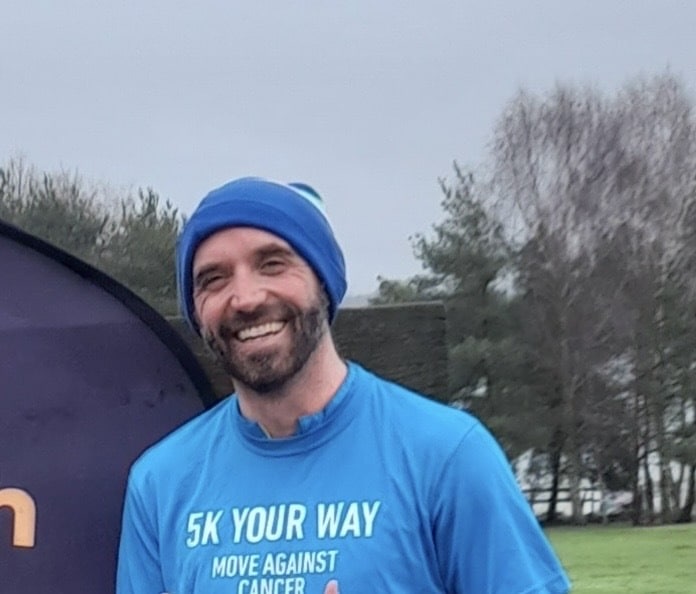
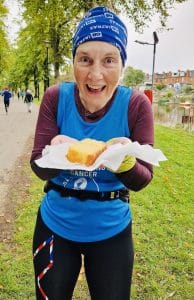 I found 5k Your Way after my secondary diagnosis. I realised I needed support and the beauty of it for me was that the support centred around movement and community. I love that a group is made up of different ages, different cancers etc but what we all have in common is a “can do” attitude. We obviously all have cancer in common too but that said, it’s often an unspoken understanding at the group – it may be what has brought you there but you don’t necessarily talk about cancer. I love the sense of belonging too.
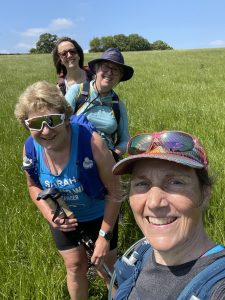 The Shrewsbury group that I go to is incredible. There are around 25-30 people attending each month and everyone is so friendly. When there are newbies I’m happy to be that person who says “I’ll come with you” – I know how important it is to hear that because I have it from Steve and Charlotte. I’ve also discovered the wider MOVE community and loved taking part in the charity trek back in May (even though it was only two months since my hip op!)
Things have come a long way in the past couple of years as regards movement and cancer but I feel that there’s still too many in the medical profession who don’t get it. “Rest is best” is still implied, even if it’s not said. There’s also never any emphasis on what you can do which is crucial for people navigating cancer. I’ve been thinking about the language we use too – I like the word “movement” better than “exercise” as it can encompass all manner of things. When you can no longer do what you used to do, you find other ways to move.